
Garten of Banban
Euphoric Brothers GamesAdventure
3.82.34K Reviews
- Version
- 1.0
- Installs
- 10.00M
- Age Rating
- Teen
Screenshots
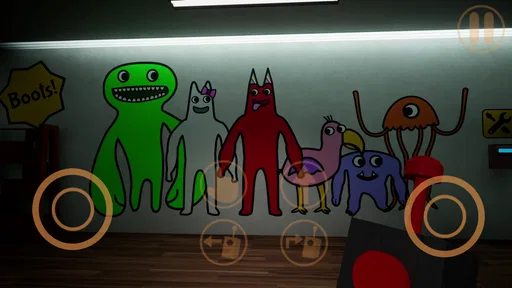
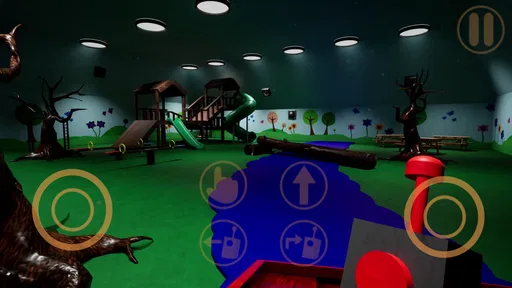
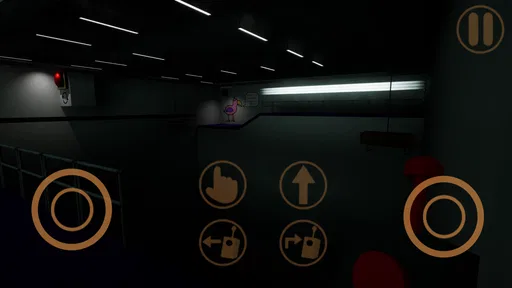
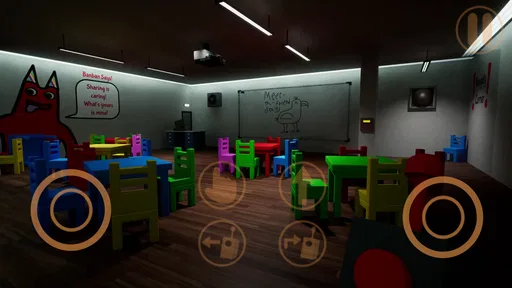
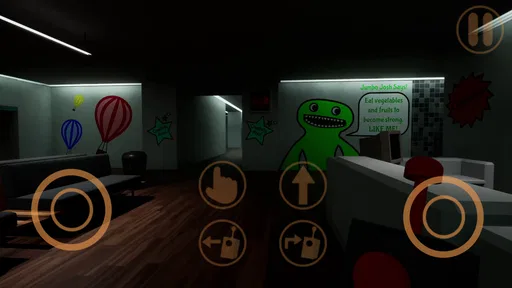
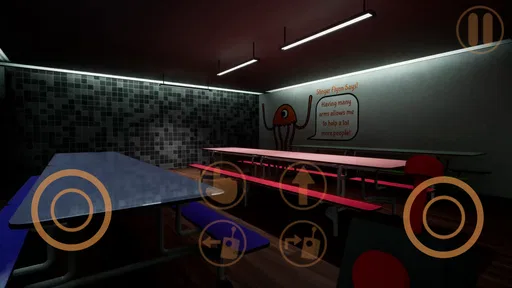
Our Review of Garten of Banban
 Analysis by Appyee
Garten of Banban is the kind of mobile adventure I open when I want a short burst of strange, uneasy exploration rather than a long role-playing game. It places the familiar Garten of Banban setting on a phone and keeps the focus on moving through an unsettling environment, examining what is around me, and trying to understand what happened there. My first impression was that it works best as a compact horror-flavored experience: simple to pick up, easy to recognize, and more interested in atmosphere and curiosity than in complicated systems.
The game is free, which makes it easy to try without committing to a purchase. It comes from Euphoric Brothers Games and is listed for Teen players. That age guidance matters because the appeal depends on creepy imagery, tension, and an uneasy tone rather than cheerful adventure alone. I would not treat it as a relaxing game for very young children, even though its colorful visual style may initially look playful.
How the core loop feels on a phone
I find the phone version’s core loop works best when I treat each stretch as a small investigation: look around first, move with care, then use any new clue to decide where to focus next. That approach helps limit aimless backtracking and makes brief play sessions easier to resume. It also makes the touch-control trade-off clearer, which is worth keeping in mind as I consider whether this adventure fits my usual way of playing.
The first action is usually curiosity
My first meaningful action is not a complicated combat move or a character-building choice. It is simply stepping forward and looking around. The environment invites questions: what is this room for, which path matters, and what detail might become important later? That makes the opening feel approachable on a touchscreen. I do not need to learn a large control scheme before the adventure begins.
That simplicity is also a useful warning. Anyone expecting an action-heavy mobile game may find the pace restrained. The pleasure comes from noticing, testing, and following the trail of the setting. I found myself playing less like I was clearing a conventional level and more like I was investigating a place that was designed to make ordinary spaces feel suspicious.
Touch controls are most comfortable when I keep my movements deliberate. Rushing through a room can make it harder to notice an interactive object or remember where I have already been. My practical advice is to slow down whenever the environment changes, especially after entering a new area. Taking a moment to look at the layout saves time later and makes the exploration feel intentional instead of random.
The mobile format suits this first step because I can play in small pieces. A quick session during a break works better here than it would with a huge open-world adventure that demands a long uninterrupted commitment. Still, I would use headphones only when I am comfortable with the game’s unsettling mood; sound and silence are part of the tension, and the experience loses some of its character when played carelessly in a noisy place.
Feedback arrives through discovery and tension
The feedback rhythm is built around a simple exchange: I explore, the game gives me a visual or situational clue, and that clue encourages another look at the surroundings. The reward is not always a dramatic victory screen. Often, it is the feeling that a confusing space has become slightly clearer or that I have found the next reason to keep moving.
This rhythm is what separates the game from a basic walking tour. My actions have a purpose because the environment keeps asking me to connect details. Even when the immediate result is only a new piece of context, that small response matters. It turns wandering into progress and gives the next room a reason to exist.
At the same time, the feedback can feel less satisfying if I want constant confirmation. This is not a game that needs to announce every successful observation with a large reward. Players who enjoy quiet environmental clues will appreciate that restraint. Players who prefer obvious objectives, frequent upgrades, and a clearly marked route may occasionally wonder whether they are missing something.
I found a useful approach in treating each area like a short investigation. Rather than touching everything immediately, I first scan the space, identify unusual objects, and then test the most likely points of interest. This reduces aimless backtracking and makes the game’s small discoveries feel earned. It is a modest habit, but it improves the experience more than trying to move as quickly as possible.
What counts as a reward
In this adventure, the reward is mainly forward momentum and a stronger understanding of the setting. Reaching the next piece of the experience gives me a reason to continue, while the unsettling presentation supplies the emotional payoff. The game does not need a deep inventory or a long list of character statistics to make a discovery feel useful.
That design makes it approachable for people who are new to horror games. I can focus on the surroundings and the story atmosphere instead of learning a demanding combat system. It also explains why the game may appeal to fans of the wider Garten of Banban world: recognizing the tone and characters adds another layer to the exploration, even when the immediate task is straightforward.
There is a trade-off here. A player looking for replayable progression, extensive customization, or a large collection of unlockable content should look elsewhere. The reward structure is about seeing what comes next, not endlessly improving a character. Once the mystery has lost its freshness, the motivation to return depends heavily on how much the player enjoys the setting and the act of revisiting it.
For a first playthrough, I recommend resisting the urge to search for a perfect route. Let the environment guide the pace. The game works better when I allow myself to notice the odd details and absorb the mood, rather than treating every room as a checklist. That is one of the less obvious strengths of the experience: its colorful presentation can make me lower my guard, which makes the darker moments more effective.
Why another session begins
The reason I start another session is usually unfinished curiosity. I want to see what the next space changes, what a strange detail means, or whether the tension will pay off. This is a narrower motivation than the endless reward cycle found in many mobile games, but it is honest and effective while the mystery still feels fresh.
Short sessions are especially useful because they preserve that curiosity. If I play until every moment blends together, the atmosphere becomes less distinctive. Stopping after a meaningful discovery gives the next session a clear starting point. In everyday use, I could play a little in the evening, put the phone away when the tension peaks, and return later without needing to remember a complicated build or a long list of daily tasks.
That also makes the game a poor choice for someone who wants a permanent mobile hobby with constant new goals. It is better suited to a focused adventure than to a routine built around daily rewards. The question is not whether it can occupy endless hours, but whether its exploration and mood are strong enough to make me want to continue during the time it does have.
Resetting after confusion or a mistake
The reset part of the loop is important because exploration can become confusing. When I lose track of where I have been or make a poor decision, I need to regain my bearings before the next attempt feels meaningful. I found that mentally resetting works best when I stop moving, look at nearby landmarks, and retrace only the most recent steps instead of wandering through the entire area.
This is also where mobile limitations are most noticeable. A touchscreen is convenient, but precise movement and camera control can feel less natural than playing a similar adventure with a physical controller. If a tense moment demands quick orientation, small control errors can interrupt the mood. I would not call this a reason to avoid the game, but it is a real consideration for players who are sensitive to awkward touch input.
My other practical tip is to play with enough battery and attention for a complete stretch of exploration. The game is free and easy to install, but that does not mean it is ideal for distracted multitasking. Notifications, bright surroundings, or frequent interruptions can make it harder to follow environmental clues. The experience benefits from a calm setup, even if the actual session is brief.
When I return after a break, I try to remember the last unusual object or location rather than every detail of the plot. That small memory cue is enough to restore my sense of direction. It also highlights the game’s intended rhythm: action creates a clue, the clue creates uncertainty, and the uncertainty gives me a reason to investigate again.
Who will enjoy this particular adventure
I would recommend it to players who like compact horror adventures, colorful but unsettling worlds, and games that let curiosity lead the way. Fans of the Garten of Banban setting will naturally have more context for the presentation, but newcomers can still approach it as a strange exploration game without needing a large collection of mobile gaming habits.
It is also a reasonable choice for someone who wants to try a horror-themed game without paying first. Since it is free, the barrier to testing the atmosphere is low. The game has attracted over ten million installs and holds an average rating of 3.8 from around sixty-eight thousand ratings, so there is clearly a sizeable audience for this style, even though the reception is not universally enthusiastic.
I would skip it if my priority were deep strategy, competitive play, realistic simulation, or a huge open map. I would also choose a different game if I wanted highly polished controller-style movement or a story that explains everything immediately. Garten of Banban is more comfortable with mystery and repetition than with exhaustive clarity.
The Teen rating should guide family decisions as well. Its bright characters do not make it a children’s game by default. I would preview the tone before handing it to a younger player, particularly if that player is easily unsettled by suspense or creepy environments.
How it compares with familiar alternatives
Compared with puzzle-focused adventure games, this one puts more weight on atmosphere and the identity of its setting. A traditional puzzle game may give me a cleaner chain of logic, while Garten of Banban often wants me to absorb the surroundings and wonder what they imply. Compared with action horror, it is less dependent on constant combat and more dependent on anticipation.
That middle position is both its appeal and its limitation. It can be easier to enter than a demanding survival game, but it may feel too light for players who want resource management, elaborate enemy behavior, or a long-term progression system. It also differs from endless mobile games because the main incentive is discovery rather than an infinite stream of upgrades.
For me, the best comparison is not a replacement but a use case. I would choose this when I have a little time and want a recognizable horror-adventure mood. I would choose a larger story game for a weekend project, a puzzle specialist for carefully structured problem-solving, and an action title when I want immediate mechanical intensity. Knowing that distinction prevents disappointment.
Device expectations and practical fit
The game supports devices running Android 8.0 or later, and its current listed version is 1.0. That makes checking the operating system worthwhile before trying to install it, particularly on an older phone or tablet. I also recommend keeping the screen clean and using a comfortable grip, because small control adjustments matter more during tense exploration than they do in a turn-based game.
Because the game is free, I can try it without treating the download as a major purchase decision. The more important question is whether I enjoy its particular balance of cute visual language, uneasy atmosphere, and straightforward exploration. A free entry point is valuable, but it does not change the fact that different players want very different kinds of mobile adventures.
Euphoric Brothers Games has shaped this release around the official mobile version of Garten of Banban, so the setting is central rather than decorative. That focus is good news for people arriving because they already know the series. It may be less persuasive for someone who wants a completely unfamiliar world with no existing style or character identity.
My verdict on the action-feedback-reset loop
After spending time with it, I see Garten of Banban as a focused adventure whose strongest feature is the way it turns simple movement into anticipation. I take an action by entering and examining a space, receive feedback through clues and atmosphere, gain the reward of progress or understanding, and then reset my attention when confusion or interruption breaks the rhythm. The loop is modest, but it is clear.
The game succeeds when curiosity is enough of a reward. It does not need complex systems to make another session appealing, but it also cannot hide from the limits of a compact horror experience. Its best moments come from the contrast between approachable presentation and unsettling discovery; its weaker moments appear when touch controls or unclear direction slow that discovery too much.
I would recommend giving it a try if I were talking to a friend who enjoys the Garten of Banban world or wants a free, accessible mobile adventure with a creepy edge. I would set expectations honestly: this is not the right pick for endless progression or demanding action. For a short, atmospheric investigation that gives me a reason to take one more step, however, it earns its place on my phone.
Verdict
Strengths of Garten of Banban
- Colorful environments and character designs appeal to younger players.
- Simple controls make exploration accessible for casual players.
- Short chapters are convenient for quick gaming sessions.
- The mystery encourages players to inspect rooms and collect clues.
- Available on mobile devices for convenient play without a console.
Limitations of Garten of Banban
- Some puzzles provide limited guidance and may feel confusing.
- Scary moments rely more on sudden surprises than sustained tension.
- Performance can vary on older phones or tablets.
- The story leaves several questions unanswered between chapters.
- Frequent advertisements may interrupt the free mobile experience.
Other Releases by Euphoric Brothers Games
View All
Garten of Banban 0
Adventure3.9

Garten of Banban 3
Adventure4.0

Garten of Banban 2
Adventure3.8

Garten of Banban 4
Adventure4.4
Similar Picks in This Category
View All
Roblox
Roblox Corporation4.2

Pokémon GO
Niantic, Inc.3.5

Ninja warrior: legend of adven
TOH Games4.6

Ninja Arashi
Black Panther4.6

Eyes - The Horror Game
Fearless Games sp. j.4.5

Critical Action:Gun Strike Ops
FPS Shooter & Action Game4.3
Frequently Asked Questions
What is Garten of Banban?
Garten of Banban is a horror-adventure game set in an abandoned kindergarten filled with strange characters, puzzles, and unsettling discoveries. You explore the facility, collect clues, operate devices, and try to uncover what happened to the missing children and staff. The game combines exploration with suspense rather than constant action, making atmosphere and mystery its main attractions.
Is Garten of Banban suitable for children?
Despite its colorful cartoon-style character designs, Garten of Banban contains horror themes, disturbing imagery, tense moments, and scenes that may frighten younger players. Parents should check the age rating and consider their child’s sensitivity to suspense, monsters, and unsettling environments before allowing access. It is better suited to older children, teenagers, and adults who enjoy light horror experiences.
How does the gameplay work in Garten of Banban?
Gameplay focuses mainly on exploring rooms, solving environmental puzzles, finding useful items, and interacting with the surroundings. You may also need to avoid or escape frightening creatures during certain sequences. Progress depends on paying attention to clues and experimenting with objects, so players who enjoy mystery and discovery will likely find it more enjoyable than those looking for combat-heavy gameplay.
Can Garten of Banban be played offline?
Garten of Banban is generally designed as a single-player experience, and the main gameplay does not require online multiplayer. However, an internet connection may still be needed for downloading the game, installing updates, restoring purchases, or displaying advertisements, depending on the mobile version and device settings. Check the store listing for the specific edition before traveling or playing without internet access.
Is Garten of Banban free to download?
Availability and pricing can vary depending on the platform, edition, and region. Some Garten of Banban chapters may be free to download, while others can require payment or include optional purchases and advertising. Before installing, review the official Google Play or App Store listing carefully, including in-app purchase information, permissions, storage requirements, and the developer details to avoid downloading an unofficial copy.
Play our best games!


